
By Daily News
Air Tanzania, the African nation’s flag carrier, is hoping to expand its international route network in the coming years. Prospective destinations for the carrier include African cities such as Ghana’s capital Accra, Lilongwe in neighboring Malawi, the South Sudanese capital of Juba, and the economic powerhouse of Lagos, Nigeria, as well as the international hubs of London and Dubai.
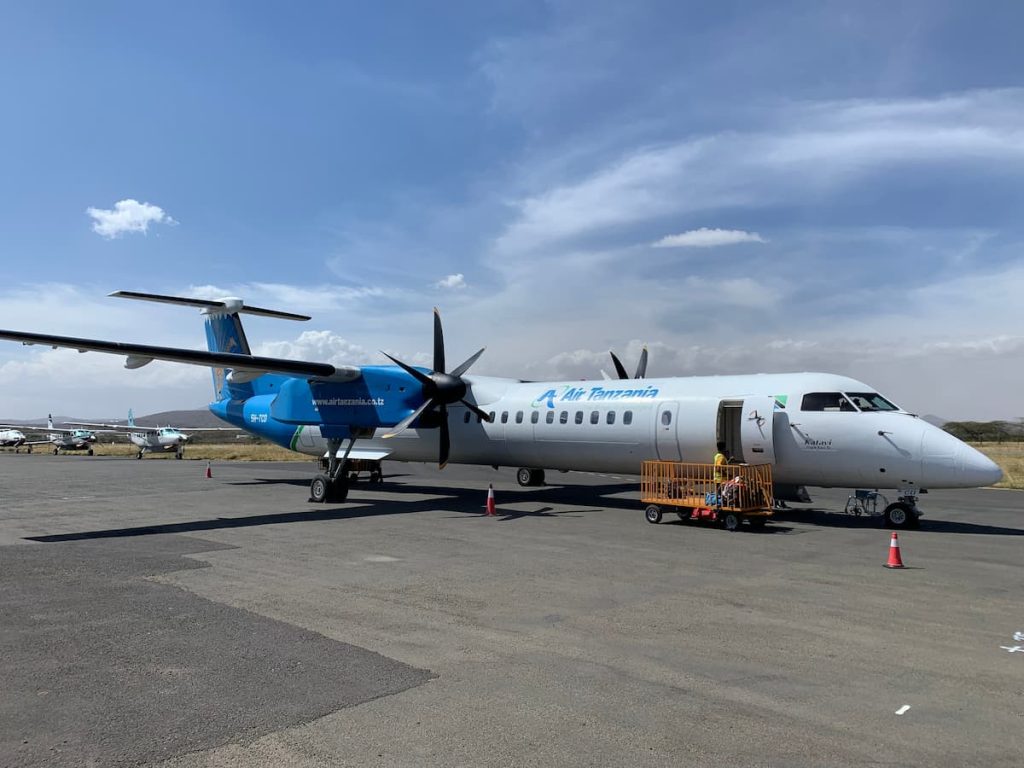
The airline, which currently has a small fleet of Airbus A220, de Havilland Dash 8, and Boeing 787 aircraft, hopes to commence service to these destinations with new jets to be delivered in the coming years.
While the carrier served as a small regional player in East Africa for most of its existence, a 2016 initiative by Tanzanian President Magufuli saw the airline establish a stronger international presence, including a recent drive to acquire landing slots at London’s Gatwick Airport.
A unique network
Currently, the airline’s international network consists of a handful of nearby African cities, as well as the long-haul destinations of Mumbai and Guangzhou.
The carrier’s expansion strategy throughout Africa has been and remains fairly straightforward. The airline sought to first connect Tanzania with its neighboring nations and now aims to establish direct service between Dar es Salaam and other large business centers in Africa.
The development of a long-haul route network, however, has not followed a traditional pattern. While most would expect Air Tanzania’s first destinations outside of Africa to be the world’s largest transportation hubs in Europe and the Middle East, the airline chose instead to establish links in India and China first.
The connection to Mumbai is easily explained—Tanzania’s population of immigrants from India exceeds 60,000, allowing the carrier to cater to the demand from the diaspora.
The carrier’s service to Guangzhou, however, does not cater to an ethnic community but rather speaks to the developing economic relationship between Tanzania and China. Recently, the nation signed a $2.2 Billion contract with a Chinese firm for the construction of a railroad connecting the nation to most of East-Central Africa.
Expansion beyond new destinations
Air Tanzania’s growth has not just come in terms of route additions. Notably, the carrier’s passenger numbers have increased exponentially, ballooning from 4,000 monthly in 2016 to 90,000 in 2023, as well as expanding its market share from 2.4% to 57%.
Additionally, the carrier has recently entered partnerships with Middle Eastern players including Emirates, Oman Air, and Qatar Airways. The airline also joined forces with Air Senegal in March to address Airbus A220 groundings.
Expansion beyond new destinations
Air Tanzania’s growth has not just come in terms of route additions. Notably, the carrier’s passenger numbers have increased exponentially, ballooning from 4,000 monthly in 2016 to 90,000 in 2023, as well as expanding its market share from 2.4% to 57%.
Additionally, the carrier has recently entered partnerships with Middle Eastern players including Emirates, Oman Air, and Qatar Airways. The airline also joined forces with Air Senegal in March to address Airbus A220 groundings.