
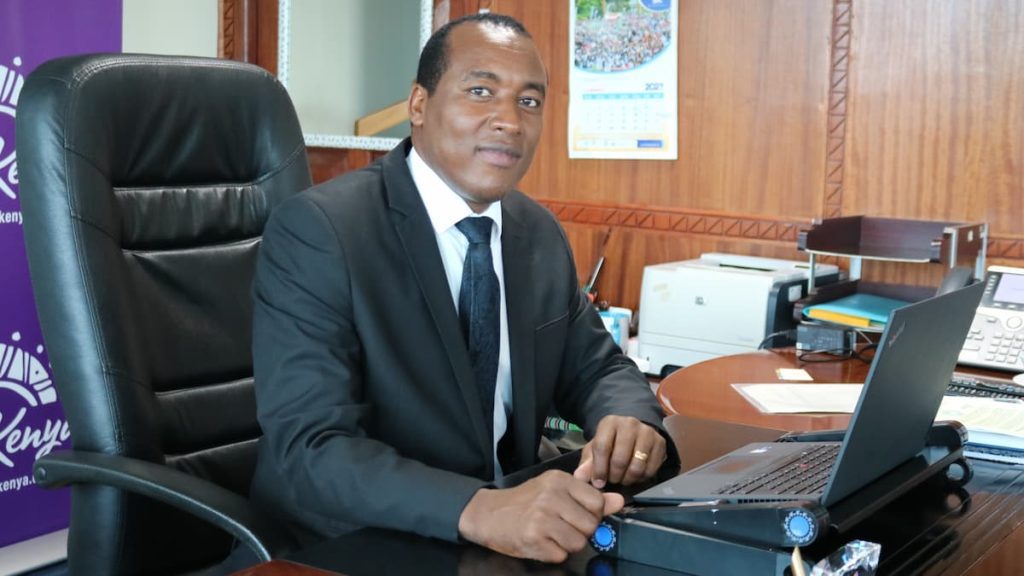
“Our vision is to elevate tourism to a level where we can have substantial foreign
exchange reserves, as tourism is an efficient solution to our economic woes.”
It is over five months since John Chirchir was picked as the acting chief executive officer of
Kenya Tourism Board (KTB) on November 17, 2022. At the time, the coronavirus pandemic and
General Election jitters are the storms that nearly rocked the tourism sector, but eventually,
the lockdowns ended, covid spread was contained, a new administration was ushered in,
and today, the most urgent challenge to address is how to bring the sector back to its former
glory.
At the time, the coronavirus pandemic and General Election jitters were the storms that nearly
rocked the tourism sector, but eventually, the lockdowns ended, covid spread was
contained, a new administration was ushered in, and today, the most urgent challenge to
address is how to bring the sector back to its former glory.
Each chief executive always comes with signature promises, from how they are going to
deliver and push policies that are in line with the development of a strong corporate brand to
how they expect to achieve their overall objectives.
In the case of Mr. Chirchir, who is a marketer at heart, over the next five years, he will work
with local communities and stakeholders to ensure that tourism benefits everyone involved
in the value chain. He also expects marginal growth in earnings thanks to the “magical
nature” of the country.
“Our vision is to elevate tourism to a level where we can have substantial foreign exchange
reserves, as tourism is an efficient solution to our economic woes,” said Mr. Chirchir in an
exclusive interview with Zurulink Africa Magazine. “Tourism has a significant impact on
various facets of society, directly employing nearly a million people in Kenya and even more
indirectly. Furthermore, it contributes about 10% to the GDP, which is a considerable
amount.”
Kenya ranks position 63 in the East African region and 72 internationally, according to the latest
data by Tourism Research Institute. The positions speak volumes. However, as one of the
fastest growing sectors, tourism is headed towards sustainable levels.
In 2022, the arrivals into Kenya from the Indian source market alone recorded a growth of
93.2% from 42,159 in 2021 to 81,458 in 2022. This is a recovery of 67% compared to the
2019 performance of 120,893.
“In 2023, we expect to have fully recovered and even added a big percentage. We are
targeting growing arrivals to 3 million and then to 5 million but then there are all these
things that we need to do to be ready for that. First, it will be 3 million then sustainably
maintain the momentum to a place where we can do more,” says Chirchir.
He noted that the State Corporation’s five-year strategic plan is ending this year and that
they are currently working on the next one that will run from this year to the next five years.
Besides county governments, the agency is working with Kenya Wildlife Services in an effort
to unlock local tourism.
“We have increased employment for women and youth because we are now going to the
countryside through working with counties developing tourism products. We are currently
implementing a mapping exercise of what is available in Kenya for tourism and experience,
working with counties and working with SME investors,” says Chirchir.
During the one-on-one interview, the acting chief executive gave an example of the Indian
market where locals and private sector players are at the forefront of marketing native
destinations. To him, only niche products will help lift the numbers of domestic and
international arrivals.
So, why are cab drivers picking up visitors from the airport, for example, not seeing a business
opportunity when the government’s marketing agency has made it clear that tourism
business is sustainable to operate?
“I have gone to countries where taxi drivers advise visitors on where to visit. They would ask
them, ‘How long are you staying here?’ You actually think of extending your stay before you
go to your hotel,” he said, adding that drivers generally know all the corners from national
parks to conservancies, hotels and restaurants, major towns to remote places, sandy
beaches, and more. He says: “They also understand adventure, heritage, wildlife as well as
city life.”
Domestic travel
Through a corporate promotion dubbed “You deserve a holiday”, Chirchir believes the many
challenges that continue to cloud domestic travel such as affordability, culture as well as lack
of awareness on products that local travellers can take advantage of, will be a thing of the
past.
To capture the demands of the dynamic tourism market, the agency is set to visit a number
of towns. It started with Nairobi, Nakuru, and Kisumu, and recently shifted the focus to
Nanyuki and Mombasa. Visits to corporates, churches, and golf courses also reveal that
tourism is a hot market.
The State Corporation is also incorporating priorities from the government that include
affordable travel, diversifying tourism across Kenya, increasing arrivals, earnings and
looking at tourism not just from a strategy that is high-end, but one which caters for
everybody.
“There is a group of travelers who are not constrained by financial limitations and are
seeking an extraordinary experience. They charter a private jet and remain in their
destination for as long as they please, without the need to align their travel plans with the
migration season. In addition, some individuals are escaping adverse weather conditions,
such as winter, and Kenya offers an ideal year-round climate,” says Chirchir.
“We have also received numerous inquiries, some of which have resulted in confirmed
bookings, while others initially expressed concerns over the cost of the trip. However, upon
learning about the different options available, these individuals have also agreed to embark
on the journey. Thus, there has been a significant domestic recovery,” he adds.
Mr. Chirchir, previously in charge of the agency’s digital marketing department and the
primary person responsible for destination branding was appointed acting CEO during a
challenging period for the tourism industry. Equipped with a Master’s Degree in Hotel and
Tourism Management, a Bachelor of Commerce in Marketing, and a postgraduate Diploma
in Digital Marketing, he possesses the necessary skills to propel the agency to greater
heights.
With over 20 years of experience in destination marketing and has served as the
Digital Marketing Manager, Mr. Chirchir has played a critical role in driving marketing
initiatives in Kenya’s key source markets, such as Europe, Emerging Africa, and the US.
He says Kenya can also win new markets by embracing technology. With internet and
smartphone penetration, travelers, especially the youth, can visit magical destinations
across Kenya and “go live” through social media platforms like Facebook and Tik Tok – real
time engagements can entice their followers.
It appears the current and previous CEO’s strategies to shore up numbers in terms of
domestic and international arrivals hinge on partnerships with private-sector players. There
is no doubt that partnerships with other stakeholders in the tourism industry, such as hotels,
travel agencies as well as ordinary Kenyans will push the demand for tourism to sustainable
levels.
“The primary objective of our KTB is to ensure that individuals contemplating their next travel
destination consider Kenya. It is crucial for us to avoid promoting Kenya as a once-in-a-
lifetime or seasonal destination. Our goal is to position Kenya as a year-round tourist
destination, and our approach is centered around effective storytelling. Our aim is to craft a
compelling narrative that showcases the magic and beauty of Kenya and creates a sense of
trust and reliability in the destination,” he says.
He cites “Magical Kenya signature experiences” initiative where the private sector comes up
with experiences that tourists would pay. Kitengela Glass factory is one good example –
access to the bridge and a stroll around the establishment can easily make a visitor extend
his/her stay for a few hours or even days.
In Maasai Mara, one of his favorite signature experiences is ‘becoming a Maasai Moran’
where a visitor is taken through how and what it takes to be a Moran. It is also interesting to
note that the Samburu and the Maasai people have been the pillar that Kenya’s tourism is
known for, but there is a new lot of travelers who are eager to go deep and know-how, for
example, particular communities’ dress. Maasai men, for example, are traditionally born and
raised to be warriors to protect their livestock.
“These are the experiences that should be projected out there, Chirchir explains. “You truly
become a Maasai, so those things that connect well with consumers do come up, and it is so
good especially if you are from another country. Beautiful places like conservancies have
also come up where communities are involved. They receive tourism dollars, but they need
to be known.”
In a nutshell
Kenya Tourism Board is determined to bring the country’s tourism industry back to its former
glory by prioritising local communities and stakeholders. Chirchir is optimistic that the
industry will recover with the country targeting growth in arrivals to three million in 2023, and
then sustainably maintaining the momentum towards five million. The board is working with
stakeholders including the private sector to unlock local tourism and is incorporating
priorities from the government to diversify tourism across Kenya while catering to a wider
range of travellers, including those who are financially constrained.