


Birth tourism is not a new phenomenon to many. It has made headlines in the last several
years, often as a controversial subject prompting debates by national leaders on many fora,
but many people pretty much don’t understand how the practice works. However, as more
and more people are finding out about the hidden world of birth tourism, the more the issue
is gaining global attention, and, in some sects, it has become a hot button.
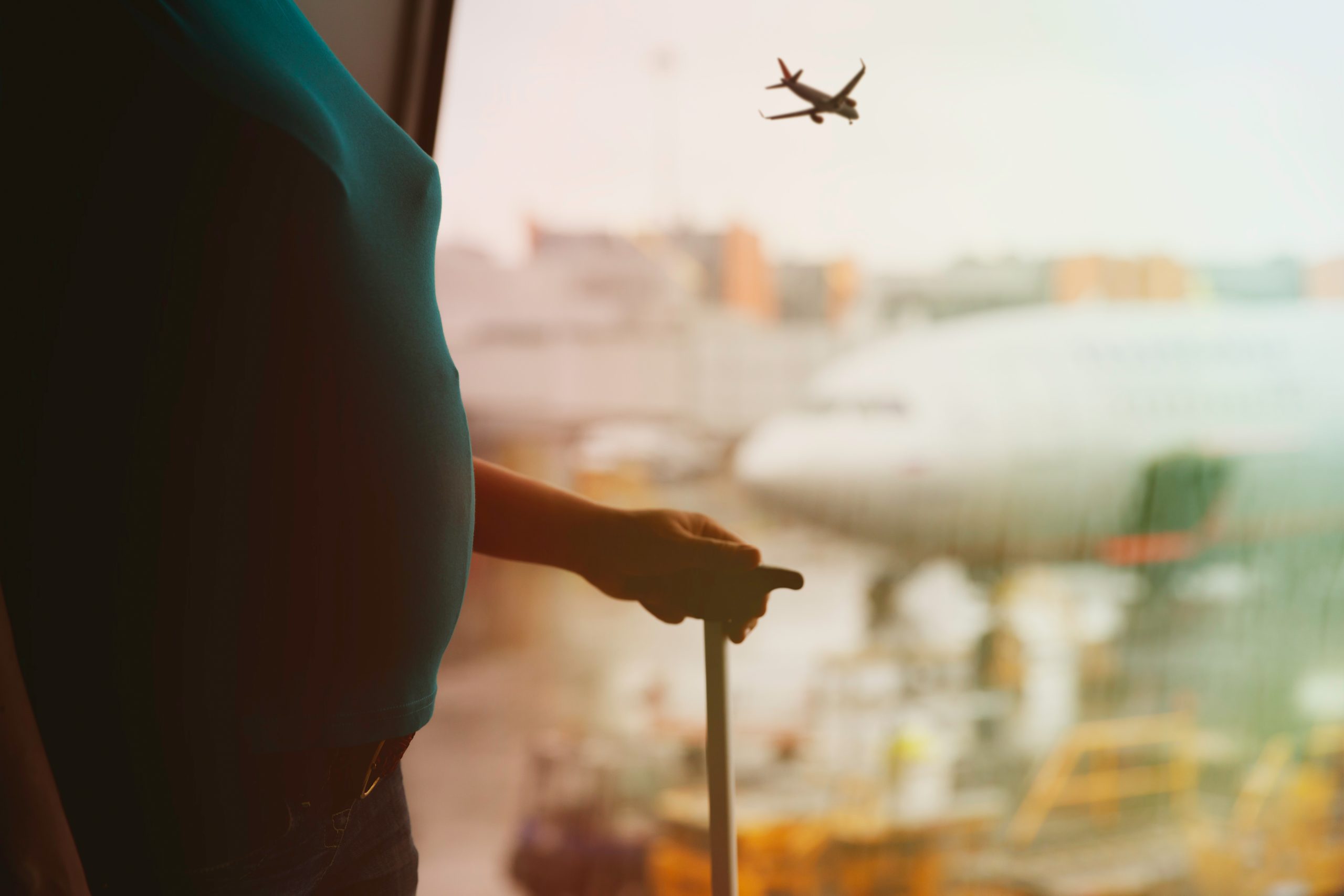
As much as birth tourism could be argued to overlap with medical tourism, it is not. In this scenario, a woman
travels to another country for the sole purpose of giving birth in that country so that their
new-born could acquire automatic citizenship.
Jus soli
The issue of birth-right citizenship gained global attention in October 2015 after President
Donald Trump pushed for its elimination, though it is enshrined in the American Constitution.
For a broader understanding, citizenship laws can be classified as jus sanguinis or jus soli;
Latin terms alluding to how citizenship is obtained.
Jus soli (law of the soil or birth-right citizenship) implies that where one is born decides their
citizenship by birth. Many countries follow this law that entitles every child born within their
borders to be a native by birth paying little attention to the citizenship or visa status of their
parents. Canada and the USA are good examples of this provision. Every child born in the
USA or Canadian soil automatically becomes a citizen by birth. Other countries clustered
here include Mexico, Tanzania, Argentina, Pakistan, Brazil, and most of the south American
countries.
Birth tourism is completely legal in these countries provided expectant mothers do not
circumvent any immigration process. Pregnant women can enter the countries at any stage
of their pregnancy. However, most airlines restrict travel to before 36 weeks gestation, but
this can be allowed with clearance to fly from a medical doctor.
Many people who engage in birth tourism mostly just do not trust their underfunded and
overburdened domestic medical system and are typically motivated by a desire to receive
high-quality healthcare, or to secure future educational or employment opportunities for their
child in the preferred country. This desire for the pregnant woman to receive better quality of
healthcare during birth forms the thin line between birth tourism and medical tourism.
Abusing the system
Under the principle of jus soli — the right of the soil — being born in the above countries
confers automatic citizenship. But as more pregnant women arrive each month to give birth,
with Canada and USA being the most preferred destinations, native residents are protesting
that birth tourists are gaming the system, testing the limits of tolerance, and debasing the
notion of citizenship.
Birth tourism is a multibillion-dollar industry. Media reports indicate that parents pay
thousands of dollars to secure spaces in birth tourism hotels abroad. These are places that
offer specialised care and residence to mothers who are due to deliver, normally 2 months
before the expected delivery date.
Data shows that Chinese nationals are the largest participants in this practice. This has been
orchestrated by the now repealed one-child policy that limited Chinese couples to one child.
This prompted the family to seek a different citizenship for the subsequent children in order
to circumvent the one-child policy.
To discourage birth tourism, countries like Kenya, Australia, France, Germany, Ireland, New
Zealand, South Africa, and the United Kingdom have adopted the jus sanguinis, only
granting citizenship by birth if at least one parent is a citizen of the country or a legal
permanent resident.
Born mid-flight
Another interesting phenomenon of birth tourism is when an individual is born mid-flight or
aboard a sea vessel on international or territorial airspace or waters. It is not very common
for babies to be born while up in the sky, but it has happened a few dozen times since
humans first took flight.
Historical data indicates that the first mid-air birth dates to 1929. Due to its rare nature, when
a baby is born mid-flight or in international waters, it becomes a newsworthy event as the
plane lands/ship docks with one more passenger than it had when it took off. Unlike the
normal birth tourism, this phenomenon is not planned for and has in many occurrences
raised questions as to whether the child can claim birth-right.
Usually, the baby will become a citizen of the same country as the parent. However, these
children may at times have claims to a country’s airspace or to the country of which the
vessel they were aboard is registered. The 1944 Convention on International Civil Aviation
provides that all aircraft have the nationality of the state in which they are registered and
may not have multiple nationalities. Thus, the law of the aircraft’s nationality is applicable on
the aircraft. However, the nationality laws of a country supersede this provision, thus it is not
mandatory that a birth on a country’s aircraft is to be treated as a birth in that country for the
purposes of nationality.
The citizenship answer is usually not straightforward and depends on many factors.
Although many countries do not grant citizenship based on location of birth, the countries
listed earlier do grant birth-right citizenship for being born inside or within their borders
including the sky and territorial waters.
In a nutshell
Birth tourism is a controversial practice that raises important questions about citizenship,
immigration, and the fairness of access to opportunity. While some argue that it is a
legitimate way for families to secure a better future for their children, others claim that it is a
form of cheating the system and taking advantage of the privileges of citizenship without fully
participating in the duties and responsibilities that come with it. Ultimately, it is up to each
individual society to decide how to address the issue of birth tourism and to strike a balance
between upholding the values of citizenship and fairness while also recognizing the
complexity and diversity of the globalized world we live in.

