


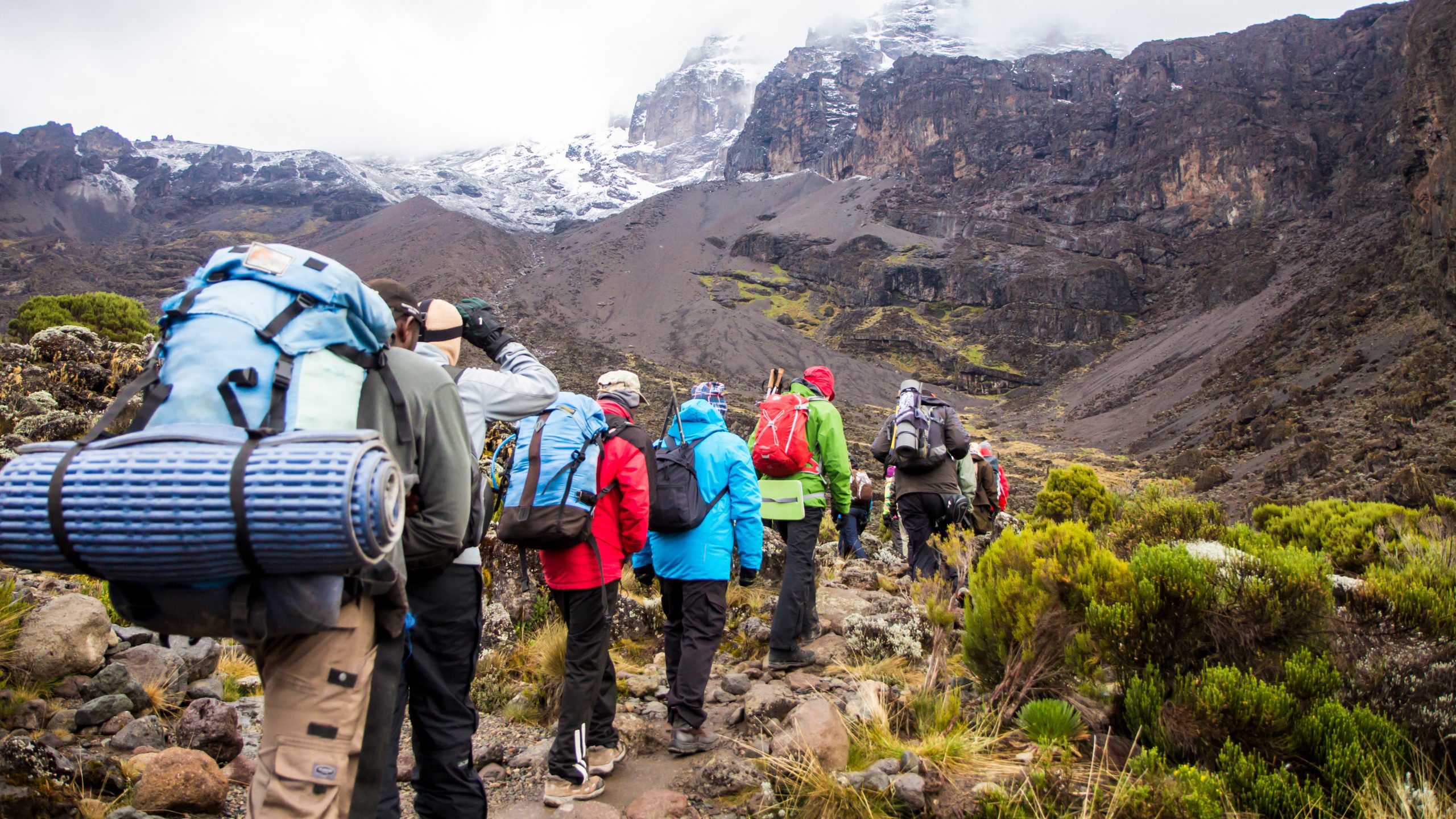
The view from the top of Kilimanjaro or Uhuru Peak can be summed up in just one phrase: “Never seen before.”
When someone proposes for a mountaineering trip to Africa or Tanzania in particular,
images of Mount Kilimanjaro conjure up in mind. With its peak at an astounding height of
5,895 meters above sea level, it is the highest mountain in Africa, also called “The Roof of
Africa.”
It rises approximately 4,900 meters from its base, and its ascent is at the top of the
priority list for many adventurers. But most first-timers are generally unaware of what to
expect or what the trekking journey is all about at the end of the day.
To give you an unbiased real sense of what you’ll be facing up there, here’s a
comprehensive mini guide for you on Climbing Mount Kilimanjaro.
Geology
Kilimanjaro is a huge stratovolcano that has three distinguishable volcanic cones. The three
are Kibo, Mawenzi, and Shira, Kibo being the highest. Uhuru Peak on Kibo at a height of
5,895 meters is the highest point in Africa and the point where most trekkers aspire to be.
While the interior of the cones is rather poorly known due to lack of erosion, the outer side of
the cones is rocky covered with snow. It is mainly composed of the layers of solidified lava
with some pyroclastic rocks which are common in volcanic areas. Continuous eruption
millions of years ago buried most older geological features except for the stratum, which is a
layer of sedimentary rock.
Weather
The weather in Kilimanjaro is largely influenced by the height of the mountain, equatorial
trade, and anti-trade winds. Upslope and downslope winds are common on the mountain,
and you’ll constantly be bombarded by them no matter where you are, southern being
stronger than the northern part. There are two distinct rainy seasons. One is from March to
May, the other being in or around November. The lower reaches of the southern slope
receive more rainfall than the northern zones and thus are lush in nature. Apart from the
rainy season, the climate usually remains dry.
One thing that’s interesting is there are five climatic zones you’ll encounter as you traverse to
the top. These are bushland, rainweald, Heath and Moorland, Highland Barrens, and
Icecaps. The order is from low to high, bushland being the lowest and icecaps being the
highest reaches.
Who Can Climb Kili?
Anyone. There is no restriction as to who can and who cannot. People as young as 8 years
old and as old as 88 years old have the history of climbing Kili. The only requirement (not by
law, but rather for success) are proper acclimatization and a level of physical fitness.
Mountain/Altitude Sickness
The primary reason for the failure of most trekkers, altitude sickness, is the physical distress
caused by ascending, medically known as Acute Mountain Sickness (AMS). Symptoms may
range from a mild headache to severity of shortness of breath. Even if the mildest difficulties
last for few hours, you cannot afford to get into any form of ailing when you’re up there. The
best way to get yourself properly acclimatized is trek at the lower reaches or another
mountain at much lower height for few days prior to your Mount Kilimanjaro Climbing. This
will give ample time to your body to adjust itself to the changing altitudes.
Routes
There are seven different routes to reach the top. These are Machame, Umbwe, Shira,
Lemosho, Marangu, and Rongai. All the routes are incredible in themselves and have their
own pros and cons. The decision on which one to trek through is solely yours but must be
made taking several factors into consideration. These include:
Physical ability and fitness level
Hiking/mountaineering skill.
Comfort level.
What you want to see on the routes.
There is another route in Kilimanjaro, The Mweka, but it is only used for descending
purposes.
Game Viewing
If you think Kilimanjaro is all about snow and trekking, then you’re mistaken. As mentioned
earlier, the giant Kilimanjaro has seven different climatic zones and the lowest one is
bushland. In the bushlands, you’ll come across many wildlife species which are part of the
Kilimanjaro National Park. This park includes the whole of Kilimanjaro and encompasses an
area of 1,688 sq km. The game viewing at the foot of the mountain includes elephants,
buffalos, leopards, colobus monkeys, bushbucks, and zebras among other animals.
Dangers and Risks
With such a towering height and harsh climate, it cannot be the fact that the trekking journey
will be risk-free. Acute Mountain Sickness or AMS, as previously mentioned, is one of them
and is probably the biggest risk with 77% mountaineers experiencing it in their journey. But
there are a few more which you should know beforehand.
• High Altitude Pulmonary Edema (HAPE), a more severe form of AMS.
• Fall from steep slopes.
• Health hazards due to improper disposal of human waste.
But the risks are minimal, or rather non-existent with proper security undertakings. Strictest
safety measures are employed by tour companies, and the well being of trekkers are
prioritized over anything else.
Standing On Top of Kilimanjaro
The view from the top of Kilimanjaro or Uhuru Peak can be summed up in just one phrase:
“Never seen before.” Clouds, birds, animals, everybody will be below you, and you’ll be able
to see through a birds-eye view into the far-off land. It’s tough, but when you make it to the
top, the scenery rewards you for every bit of it. Whichever of the seven routes you decide to
take, climbing Kili is an incredible experience, nevertheless.
In the folklore, it is said that the volcanic cones of Kibo and Mawenzi were once good
neighbors until Mawenzi pranked on Kibo and got beaten up for it, which is the most
unacceptable way explains the degraded environment of Mawenzi with little to no snow. As
hilarious and baffling the story may sound, Climbing Mount Kilimanjaro is equally fun and
amusing.

